




The US administration under President Donald Trump has reduced legal immigration far more sharply than illegal entries, with international students and high-skilled visa holders among the hardest hit, according to a recent analysis by David J. Bier of the Cato Institute, a Washington-based think-tank.“Although illegal entries have declined, the cuts to legal immigration are significantly larger,” Bier wrote, estimating that reductions in legal inflows are about 2.5 times greater than the drop in illegal immigration on a monthly basis.Legal immigration sees steepest declineThe analysis indicates that while illegal border crossings have continued a pre-existing downward trend, legal immigration has seen a sharper, policy-driven contraction. Illegal entries had already fallen steeply before Trump took office, with much of the decline occurring earlier.In contrast, legal immigration, particularly through student visas and skilled worker programs (such as H-1Bs) has reversed the growth trajectory seen between 2021 and 2024.
.
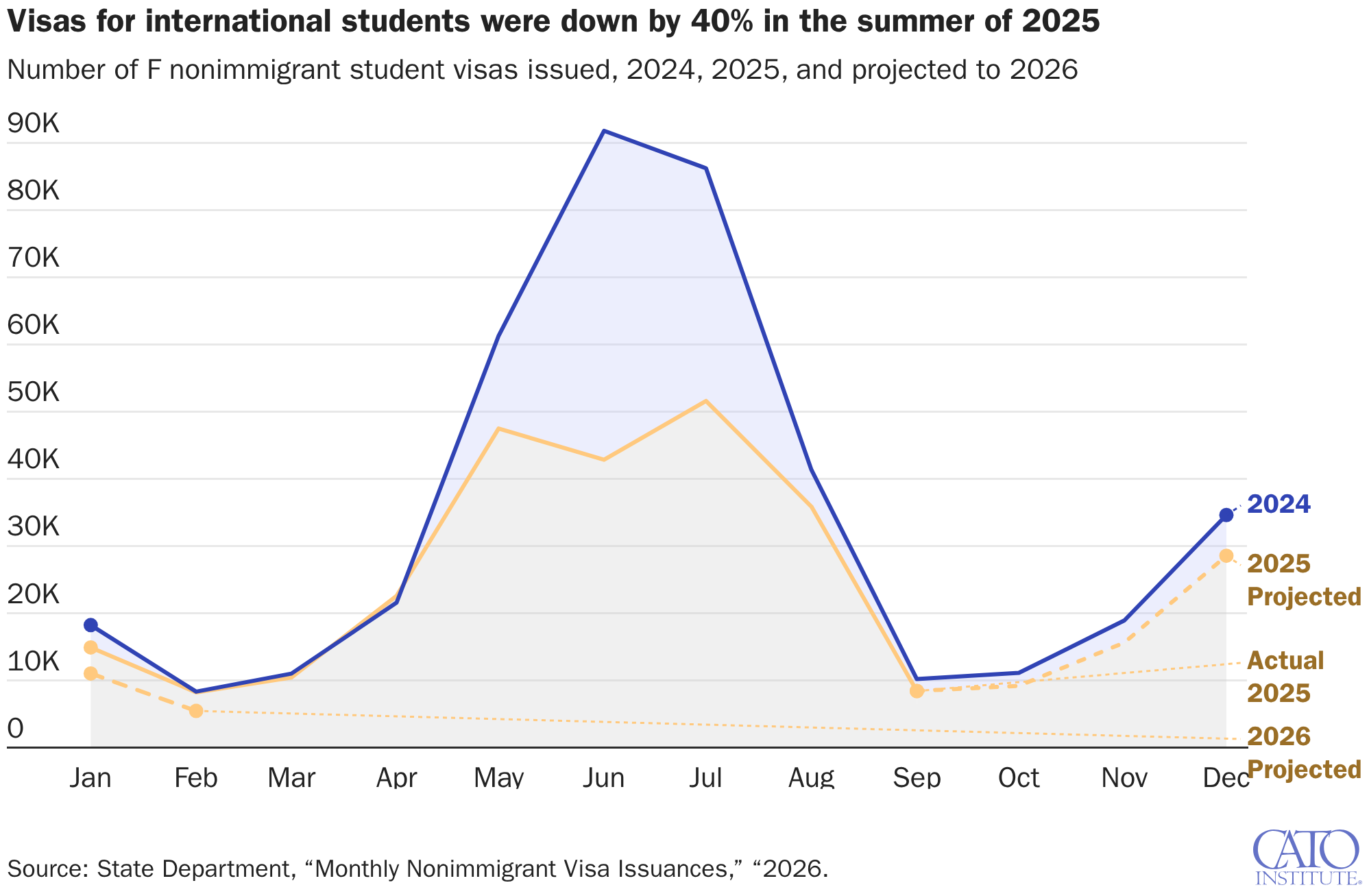
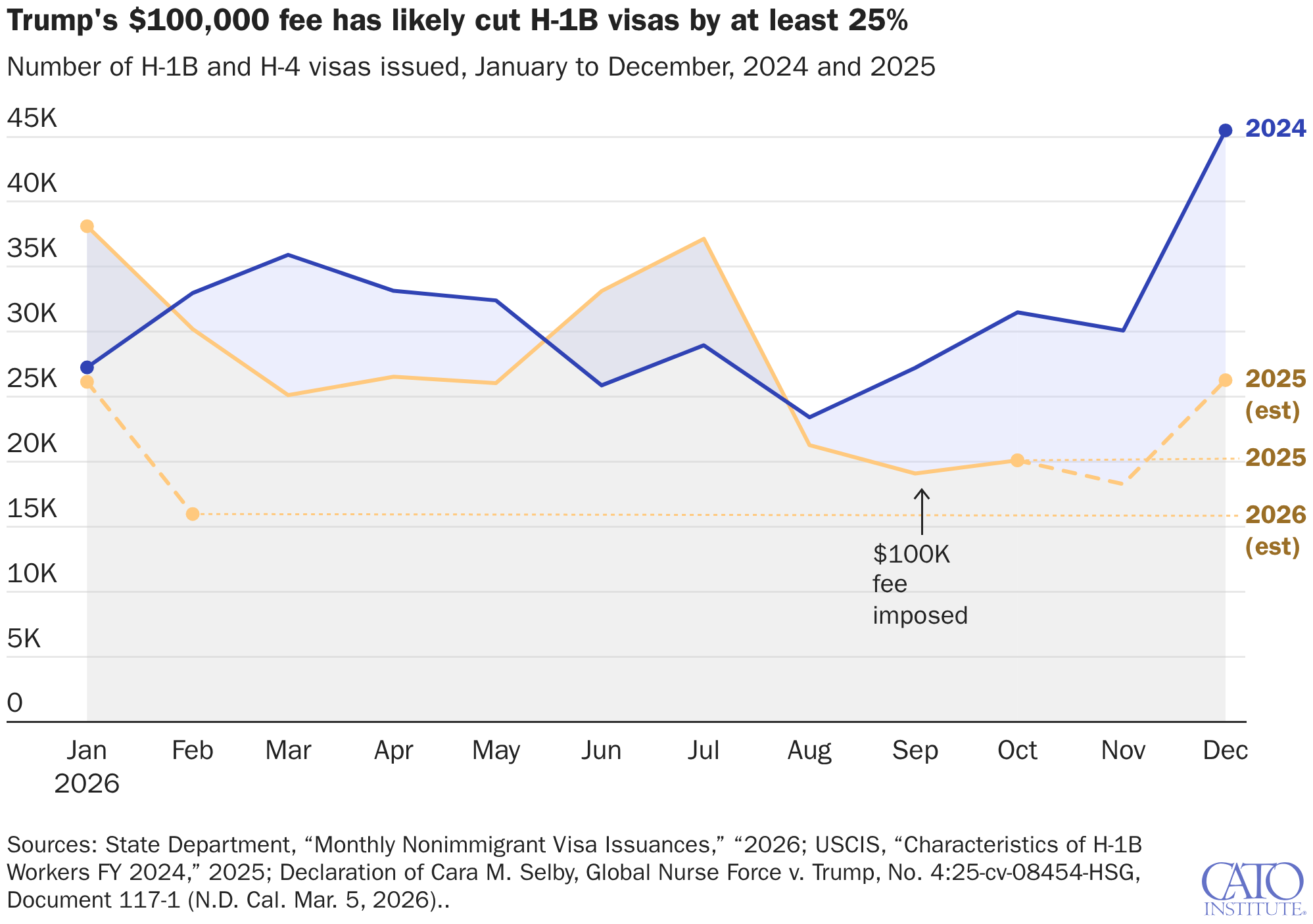
International students face rising barriersA key area of concern is the tightening environment for international students, long a cornerstone of US higher education and a major draw for Indian applicants.Bier notes that increased visa scrutiny, and uncertainty around post-study work options are discouraging enrolments. Delays in visa processing and higher rejection risks have added to the friction.His analysis states: The Trump administration has enacted specific policies targeting international students. In Jan 2025, President Trump signed an executive order that led to the cancellation of F‑1 status and revocation of between 1,700 and 4,500 student visas between Jan and April. The administration also arrested and placed in detention several students for their campus activism. In May, the Trump administration attempted to suspend the right of Harvard University to enrol international students at all, but was blocked by the courts. In May and early June, the State Department suspended all student visa issuances for three weeks during the peak season. In June, Trump signed an executive order banning student visas from 19 countries, which affected about 10,188 students annually, and in Dec, he expanded that ban to 40 countries, affecting about 23,000 students per year. Comparing the peak months when students typically get visas, student visas had already fallen by 40 percent, comparing the summer of 2024 to the summer of 2025. For many students, the ability to transition from study to employment—typically via Optional Practical Training (OPT) and then an H-1B visa—has become less predictable. This uncertainty, experts say, could push prospective students to consider alternative destinations such as Canada, the UK, or Australia.Universities are also feeling the impact. Foreign students often pay higher tuition fees and contribute significantly to research output, particularly in STEM fields. A sustained drop in international enrolments could therefore affect both finances and academic competitiveness.H-1B visa route under pressureHigh-skilled immigration, especially through the H-1B visa programme, has also come under strain. The programme is a critical pathway for Indian IT professionals especially in the tech sector.Policy changes flagged in the analysis include sharp fee increases and stricter eligibility norms. Bier has previously estimated that proposals such as a $100,000 fee per H-1B visa could reduce issuances by at least 25%, making it significantly more expensive for employers to hire foreign talent.
.
Employers, particularly in the technology, engineering, and healthcare sectors are likely to feel the pinch. Higher costs and regulatory hurdles may lead companies to scale back hiring or shift roles overseas, reducing the attractiveness of the US as a global talent hub.Bier’s analysis points out: In the average month, H‑1B visa issuances in 2025 were already lower than in 2024. But in September, President Trump signed an executive order mandating a $100,000 fee to petition for an H‑1B worker outside the US. There were 65,000 H‑1B approvals for workers outside of the US in FY 2024, and there were 2,19,659 visas issued abroad, implying that about 30 percent of visa issuances are for workers targeted by the ban. The US Department of State has not been totally transparent about the effects of the fee, but in one court filing, it implies it led to an 87 percent decline in petitions for workers outside the US. H‑1B visas had already declined somewhat by Sept, so a reasonable estimate would place current H‑1B visa issuances down by about a quarter. Since the fee only applies to new petitions approved after Sept 2025, it might take a bit longer than projected for the full effect to be felt, states the analysis. Wider economic and academic impactExperts warn that sustained restrictions on students and high-skilled workers could weaken the US innovation ecosystem. International students and H-1B professionals have historically played a significant role in research, startups, and the broader knowledge economy.A decline in these inflows may result in talent shortages in critical sectors and encourage multinational firms to expand operations in more immigration-friendly jurisdictions.Illegal immigration: decline continues, but less sharplyWhile the administration has highlighted a fall in illegal immigration, Bier’s analysis suggests that much of this decline predates current policy changes.As a result, the additional reduction in illegal entries is relatively modest when compared with the steep drop in legal immigration channels.Policy shift draws scrutinyThe findings have intensified debate over the US immigration strategy, particularly the trade-off between restricting illegal immigration and sustaining legal pathways for students and skilled professionals. Bier argues that the current approach risks undermining sectors dependent on global talent.