






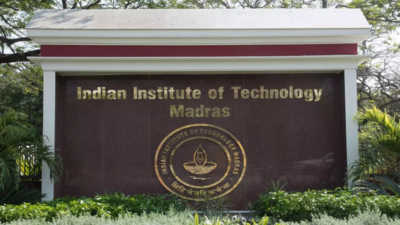
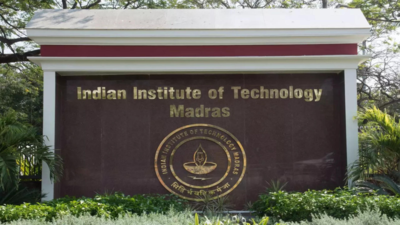
The year 2021 upended classrooms across India. Lecture halls went quiet, attendance sheets turned virtual, and students were left staring at screens, wondering whether what they were learning would actually matter outside an examination hall.One such individual was Shreya Singhal. While studying for her on-campus computer application course, she was getting increasingly disillusioned. While the course was checking boxes on a syllabus, the industry was advancing at a rate that the course could not keep up with. Data science, programming proficiency, and statistical thinking, are not nice-to-have skills anymore. Yet, in terms of practical experience, these were lacking.That restlessness led her to enroll in the IIT Madras BS Degree in Data Science and Applications offered by the Indian Institute of Technology Madras. For her, it was not merely about attaching an IIT tag to her résumé. It was about testing whether an online degree could carry the same intellectual weight as a campus one.
A second chance at Mathematics
One decision that had long left a shadow on her academic path was her decision to drop Mathematics after Class 10. India’s academic system is very rigid, and this decision often impacts her future prospects in technical areas. But the IITM BS program was different. For one thing, it began from scratch.The system was not designed to be easy. There was a careful layering of concepts, assignments were not to be taken lightly, and examinations were not to be taken casually. But what she found was not an easy route to success but a system that allowed her to start from scratch without any stigma. She pursued two degrees simultaneously, studied through the night, and relied on her peers to cope with concepts that seemed overwhelming.She balanced two degrees simultaneously, studied late into the night, and leaned on peers when concepts felt overwhelming. A friend she met through the programme, during a campus event called Paradox, became an informal tutor, reinforcing the idea that even online spaces can nurture community.“When you have the fire to go beyond what the world says is possible, then you just put in everything that you have,” she said to Business Insider.
Crossing the campus divide
Opportunity arrived unexpectedly when she was selected as a Teaching Assistant for the Python course. This role also brought her physically to the IIT Madras campus, which bridged the perceived gap between the online and on-campus student communities.Her work as a TA allowed her to interact with students physically, attend academic duties, and get a taste of the culture at one of the premier academic institutions in India. She also joined the campus Drama Club and directed a stage play. Later, she helped coordinate a collaborative theatre venture between the on-campus society and Aayam, the drama society of the IITM BS programme, building bridges where others saw boundaries.Yet her most significant turning point came quietly. While assisting with coursework, she noticed a gap in an ongoing research effort. Rather than waiting for direction, she stepped forward. That initiative uncovered a deep interest in research, an interest that would define the next chapter of her life.The progression was organic but hard-earned: a research internship at the Indian Institute of Science, followed by a Master’s degree in Education at Harvard University.
Why most online degrees falter
Today, as an education consultant with international exposure, Shreya evaluates online programmes with a critical eye. Many, she believes, falter because they attempt to mimic campus life without replicating its discipline.She argues that the IITM BS Degree stands apart because it refuses to dilute standards. Proctored, in-person examinations anchor credibility. A layered curriculum ensures depth. Peer networks and optional campus engagement create belonging. The model combines autonomy with seriousness, an uncommon pairing in the online space.India’s higher education ecosystem, she notes, often leaves passionate students searching for something more, particularly in skill-based domains like data science. The programme addressed that vacuum without promising unrealistic outcomes.It restored her confidence in subjects she once believed were out of reach. It exposed her to research as a living, breathing pursuit. It demonstrated that online education, when designed with intent and rigor, can expand—not shrink—academic opportunity.The lockdown may have confined physical campuses. For Shreya Singhal, however, it opened a door she hadn’t realised was still within reach.