









Every June, before the monsoon fully sets in, a familiar sequence plays out across Indian cities. Mumbai’s suburban trains stall in ankle-deep water. Bengaluru’s tech corridors flood after a single evening’s rain. Delhi’s underpasses fill up fast enough to trap cars. None of this is new, and none of it, by now, is unpredictable. What is harder to explain is why a country that trains more engineers than almost anywhere else on earth keeps failing at the most basic engineering problem a city faces: keeping water out and heat down.
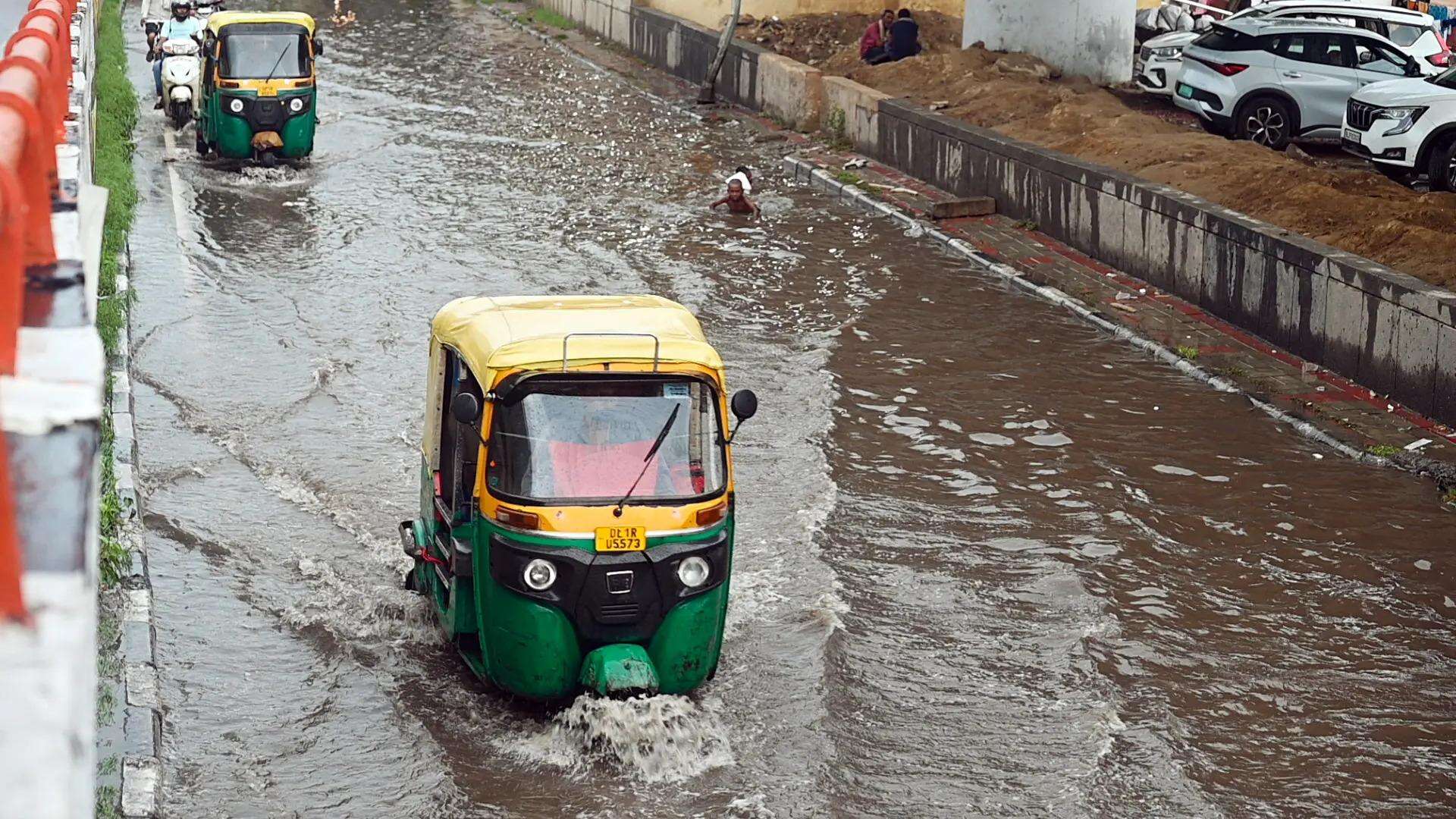
Waterlogging in Delhi
India’s technical education system is producing at record scale. AICTE data shows 12.53 lakh BTech seats were filled in the 2024-25 academic session, an eight-year high and a 67 percent increase over 2017-18. But that surge is concentrated in one discipline. Computer science and engineering leads enrolment at 3,90,245 students, followed by mechanical engineering, civil engineering at 1,72,936, electronics and communication, and electrical engineering. Civil engineering, the discipline that actually builds and maintains drains, embankments and disaster-resilient housing, trails computer science by more than two to one at the point of enrolment itself, before a single graduate has even entered the job market.Where the engineers actually goThe surplus is real, but it isn’t evenly distributed across the problems India needs solved. Computer science and IT graduates are pulled toward software, finance and consulting at a pace and pay scale that civic engineering roles, largely government postings with slower promotion cycles and lower starting salaries, cannot match. The result is a lopsided allocation: a country producing engineering talent at record volume, with that volume skewed away from the disciplines that keep cities functioning, and further skewed again once graduates choose where to build a career.
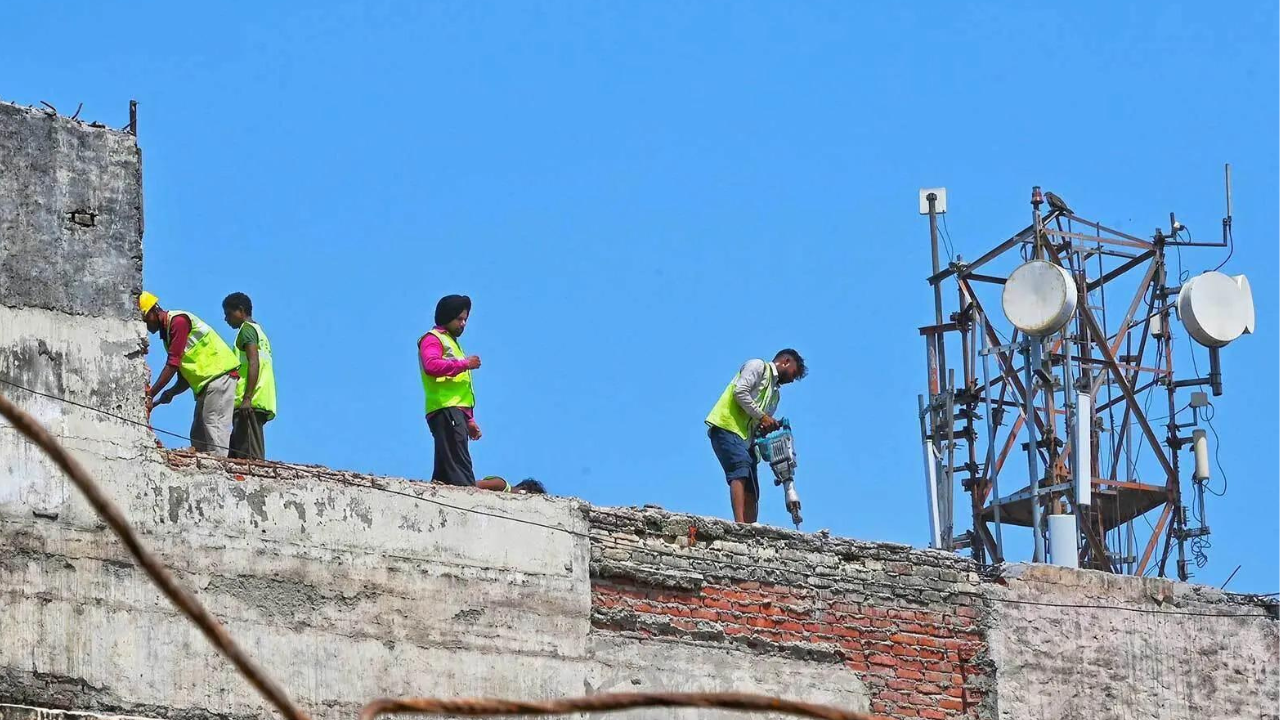
India’s engineer surplus ends before it reaches the drains
This isn’t a story about a shortage of trained people. It’s a story about where trained people end up, and about how thin institutional capacity is on the other side of that choice, inside the departments actually responsible for stormwater drains, building safety audits and urban planning.The departments meant to absorb them are understaffed by designThe gap shows up starkly inside Urban Local Bodies, the municipal corporations and councils responsible for drainage, building approvals and disaster preparedness. A compendium of CAG performance audits covering 393 urban local bodies across 18 states, released in 2025, found a 42 percent gap between the revenue resources and actual expenditure of ULBs, with just 32 percent of ULB revenue self-generated and the rest arriving as grants from state and central governments. In Karnataka, government data reviewed this year showed close to 60 percent of sanctioned ULB posts vacant across ten city corporations, prompting the state to permit hiring retired engineers just to keep basic project planning functioning.Building codes compound the problem. The National Building Code, published by the Bureau of Indian Standards, is only a recommendatory document, not a binding law, so states can adopt, adapt or largely ignore its provisions. Maharashtra’s own regulations don’t even apply uniformly within the state: the Unified Development Control and Promotion Regulations explicitly exclude the Municipal Corporation of Greater Mumbai and other planning authorities within its limits, leaving the city to run on a separate rulebook altogether.Drainage systems in most major cities were designed decades ago and were never built for the rainfall intensities cities now regularly see. On June 28, 2024, Delhi’s Safdarjung Observatory recorded 228.1 mm of rainfall in 24 hours — more than three times the June average and the highest for the month in 88 years, since 1936, according to the India Meteorological Department. The waterlogging and traffic disruption that followed looked no different from floods a decade earlier.What a new industrial corridor risks repeatingThis matters beyond the annual monsoon cycle because India is now committing serious capital to exactly the kind of large-scale infrastructure build-out that depends on this workforce functioning well. The East Coast Industrial Corridor, pegged to the Union Budget 2026-27’s announcement of a Durgapur-anchored industrial belt spanning ports, manufacturing zones and logistics networks across Odisha, Andhra Pradesh, Tamil Nadu and West Bengal, is one of several major infrastructure pushes riding on the assumption that India’s technical capacity can execute at scale. But the same staffing vacancies, advisory-only codes and enforcement gaps that produce annual urban flooding sit underneath these new projects too. A corridor is, in the end, drainage, ports, road networks and disaster-resilient construction multiplied across four states; the same civic engineering functions currently understaffed in every city that already exists.
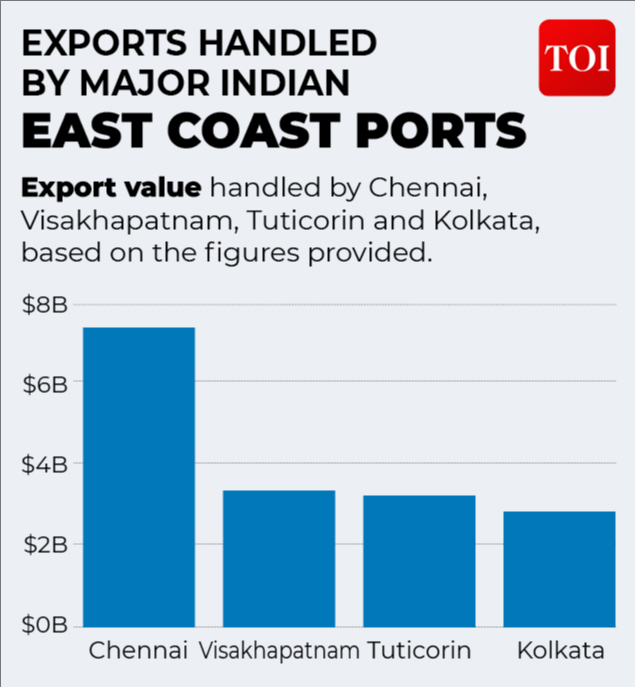
India’s next industrial boom to happen on the East Coast
The heat side of the problem makes the stakes clearer still. India’s peak power demand climbed from 214.9 GW on April 1 to a record 270.8 GW on May 21, 2026, according to the Union Ministry of Power, a 26 percent jump in fifty days, driven by sustained heat. That’s a building-design and urban-planning failure as much as a climate one: cool roofs, passive ventilation and heat-resilient construction are still treated as add-ons rather than baseline requirements in most bye-laws.A multi-city study analysing roughly 3.6 million deaths across ten Indian cities between 2008 and 2019 found that heatwave days were associated with a 14.7 percent increase in daily mortality, and estimated around 1,116 deaths a year attributable to heatwaves. The 2025 Report of the Lancet Countdown on Health and Climate Change estimated that India lost about 247 billion labour hours to heat exposure in 2024, translating to roughly $194 billion in economic losses, concentrated in agriculture and construction.None of this points to a talent problem. India has the engineers, more of them, and more concentrated in one discipline, than ever before. What it doesn’t have, consistently, is a civic system built to employ the rest where the predictable failures actually happen, inside municipal drainage departments, building-approval desks and disaster-management cells that are short-staffed and underfunded by a documented, audited margin.
Share your thoughts in the comments
Be respectful · TOI community guidelines
Every large infrastructure announcement adds new physical assets to maintain. Unless the capacity gap inside the institutions responsible for maintaining them closes at the same pace, each new corridor, each new industrial belt, inherits the same vulnerability the rest of urban India already lives with every monsoon and every summer.