






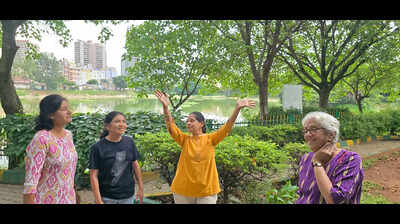
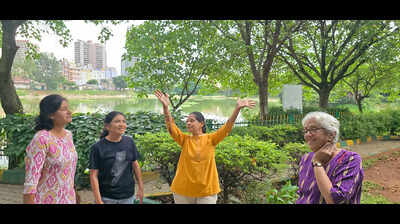
Local citizen bodies maintaining lakes for years say they should be allowed to continue doing so; BBMP’s looking for more formal structures like NGOs & corporates Puttenahalli Puttakere Lake, once a wasteland, is now a haven for birds and insects. Butterflies migrating from the Western Ghats to the Eastern Ghats had a pleasant stopover at the thriving lakeside a few months ago. Nature lovers are enthusiastically waiting for the reverse migration in September, prior to the northeast monsoon. Puttenahalli Neighbourhood Lake Improvement Trust (PNLIT) helped transform what had been a dump yard and sewage into “a people’s lake.” They also served as watchdogs of the lake. “Encroachment in the lake premises is always a matter of concern,” says Usha Rajagopalan, chairperson of PNLIT. Local communities like PNLIT have played a significant role in rejuvenating Bengaluru’s dying lakes. Such collective endeavours came to a halt some time ago, with BBMP ceasing to renew agreements with citizen bodies looking after lakes, citing a High Court order of March 2020. That order had instructed BBMP to stop entering into MoUs with corporate entities for lake rejuvenation and maintenance till the legality of the issue was examined. But BBMP has also stopped renewing MoUs with citizen bodies managing lakes on the grounds that corporates may be funding these bodies. PNLIT, like many others, tried to fight this decision, but recently gave up after renewed pressure from BBMP. Citizen groups are furious. BBMP does not have either the funds or the manpower required to maintain lakes – which also requires a constant watch on encroachments, buffer zone violations, and sewage entry. Mahadevapura Parisara Samrakshane Mattu Abhivrudhi Samiti (MAPSAS) which had been maintaining a chain of interconnected lakes (Kasavanahalli, Kaikondrahalli and Saul Kere), has been at its wits end since Oct 2019, after its MoUs were not renewed. “High Court stay is being misinterpreted to include citizen groups. The court order restraining corporates from maintaining lakes should not apply to us. But, sadly, under the instructions of KTCDA (Karnataka Tank Conservation and Development Authority), BBMP halted renewing our MoUs. We hope to get some clarity on this in the next HC hearing,” a MAPSAS trustee told us. Preeti Gehlot, special commissioner at BBMP, says the court order applies to all. She declined to comment further on the issue. But one BBMP official, who did not want to be named, alleges that some citizen bodies are profiting from lake management without real contributions. “A lot of these groups do not have expertise in lake management. They are taking away credit for what we have done,” he says.
Working pro bono
A MAPSAS trustee dismisses that allegation. “We work pro bono, and ensure that all the resources, whether from BBMP or otherwise, are most effectively applied only for the lakes, its flora & fauna, for its long-term sustainability. The volunteers seek neither name nor fame. The trustees take no remuneration. Our Trust records are professionally accounted and audited annually with no room for any misuse,” he says. MAPSAS, he says, covers multiple lakes, totalling about 200 acres, without dedicated BBMP assistant engineers. “Our volunteers monitor issues like sewage problems, fish kills, and encroachments, acting as watchdogs. BBMP officers, often overworked and managing multiple lakes, rely on us for on-the-ground information,” he says, adding that even though the MoUs have not been renewed, “we continue to collaborate with supportive officers, understanding their resource constraints and working within the system’s limitations.”
New policy: Trusts out, NGOs/Corporates in
Meanwhile, BBMP has framed a new policy that will allow NGOs and corporate houses to use CSR funds in lake management. BBMP hopes to have it cleared by the High Court soon. But some citizen bodies allege policy has not been widely discussed. And it’s far from the successful public-private-people partnership that existed earlier. As per the new policy, a trust may not be allowed to maintain a lake. “A trust is a small humble body of citizens,” says the MAPSAS trustee. It will be almost impossible, he says, for them to convert into an NGO with all the formalities that it will require, including hiring paid staff. Mukund Kumar, managing trustee of Iblur Environs Trust, says in the spirit of de-centralised development, it makes sense for the larger city administration to sub-delegate tasks to smaller geographical units. “The model applied by BBMP Lakes Department in the past was path breaking – it brought in a sense of ownership in the local communities adjacent to the lakes, who were ultimately the impacted stakeholders. It also allowed the opportunity for these entities to crowd source funds either via citizens living nearby or with CSR wings of companies. As a matter of fact, many organisations preferred the inclusion of the local community as a participant in the MoU for funding, primarily to ensure validation of funds spent wisely,” he says. Shilpi Sahu, a resident of Kaikondrahalli who has for long been watching lake conservation efforts, says even if BBMP increases its workforce 10 or 20 times, they will not be able to match what the local community can do.
VOICE BOX
BBMP has done an excellent job of lake restoration in many parts of the city like Kaikondrahalli lake, but the day-to-day involvement of local resident groups in monitoring the restoration, and in maintaining the lakes after restoration has been critical. BBMP has not historically had the funds for day-to-day maintenance, nor the staff to ensure monitoring, supervision and maintenance at site.

Harini Nagendra
It is important to ensure the lakes don’t get polluted again, that there is no illegal dumping of waste, take over by private players, security violations etc. Several of the groups involved in managing restored lakes have done so with great commitment, and without their input the future maintenance of the lakes can be at risk.
Harini Nagendra, DIRECTOR, SCHOOL OF CLIMATE CHANGE AND SUSTAINABILITY, AZIM PREMJI UNIVERSITY
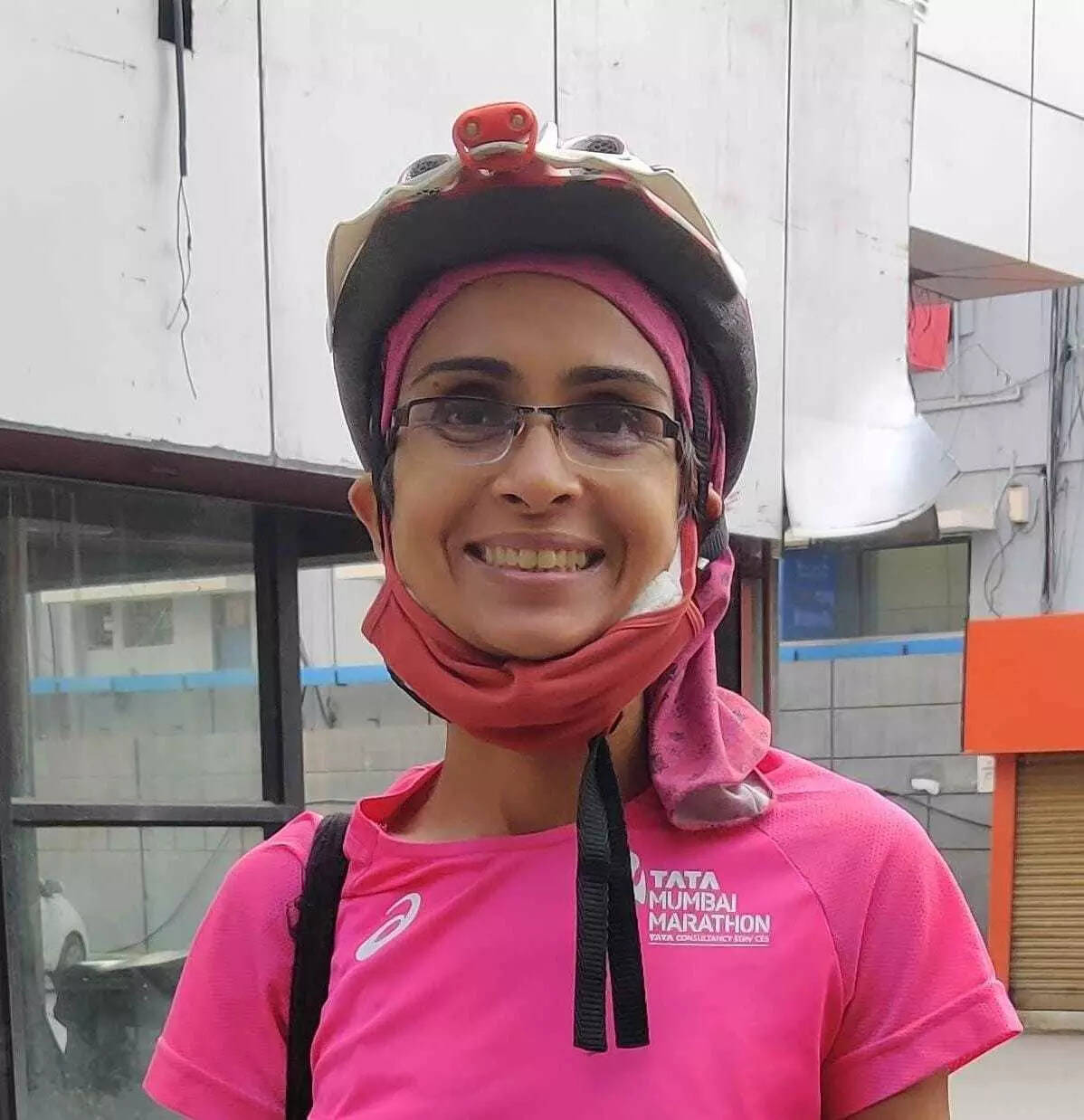
I have been to Kaikondrahalli and Saul Kere lakes many times over a decade and half. There have been some improvements in the lakes but there continue to be a lot of challenges. People living in the neighbourhood and companies are willing to help. But the challenge seems to be the closed top-down policies of the lakes dept. Even if you want to do something, there is no way to do it, or you are actively prevented from doing it by citing lack of MoU.
Shilpi Sahu
BBMP does not have enough workforce to address lake issues at scale. They need citizens who are staying around to support their activities.
Shilpi Sahu, LAKE VISITOR, LIVES IN
KAIKONDRAHALLI
A visionary like the revered Kempe Gowda created so many lakes and tanks in Bengaluru based on the gradient, with hardly any technology. Whereas today, with all the tools at our disposal, we are destroying those lakes by building on wetlands, buffer zones and lake valleys.
Meera Nair
Any conservation efforts that have happened are through citizen initiatives and now BBMP wants to trash that and allow buffer zones to be further reduced. How will lakes get access to rainwater if buffer zones are built on? Real estate greed is choking Bengaluru.
Meera Nair, CITIZEN VOLUNTEER
While BBMP has engaged on initiatives like Kere Mitra to facilitate direct outreach with citizens, most complaints on these forums largely remain unanswered.
Mukund Kumar
Private citizens would struggle to take on bigger issues, especially pertaining to encroachment and buffer zone violations.
Mukund Kumar, MANAGING TRUSTEE, IBLUR ENVIRONS TRUST
For over a decade, we operated as key stakeholders and partnered with BBMP under these MoUs with clear roles and responsibilities. In October 2019, when our lakes MoUs were up for renewal, we first got an inkling of potential problems. The recent developments (MoU cancellation) seem like a confirmation of our fears. We work pro-bono and ensure that all the resources, whether from BBMP or otherwise, are most effectively applied only for the lakes, its flora & fauna, for its long term sustainability. The volunteers seek neither name nor fame. The trustees take no remuneration. Our Trust records are professionally accounted and audited annually with no room for any misuse.
Trustee, MAHADEVAPURA PARISARA SAMRAKSHANE MATTU ABHIVRUDHI SAMITI (MAPSAS)
We fervently wish the High Court would grant us an opportunity to hear us, citizen groups. We have struggled far too long for the sake of our lakes and are reaching a breaking point.
Usha Rajagopalan
Usha Rajagopalan, CHAIRPERSON, PUTTENAHALLI NEIGHBOURHOOD LAKE IMPROVEMENT TRUST(PNLIT)
In 2020, following some violation, the High Court issued an order that prohibited MoUs with any entity. Following that, the state govt formulated a policy. It applies to all the lakes in Karnataka. RWAs and NGOs are largely funded by corporates, directly or indirectly. So we can’t enter into an MoU with any of them. BBMP is not against RWAs or NGOs. The lakes division often goes out of its way to help people.
J Nithya, EXECUTIVE ENGINEER, BBMP LAKE DIVISION