





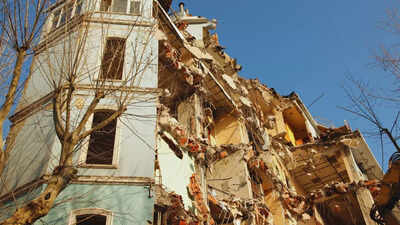
India is home to some of the oldest structures in the world such as Charminar, Ajmer Fort and various Indian temples standing tall for hundreds of years. Built using organic lime mortar, burnt clay bricks or terracotta, Jaggery, black gram, fruit pulp as well as sand and water, these provided strength, acted as natural waterproofing agents while adding increased plasticity and binding strength. These ancient techniques of building construction are making a comeback in today’s real estate industry in the form of mud and rammed earth, clay tiles, and locally available materials being used in construction along with the innovations of the modern world. This judicious mix of ancient and new-age construction techniques enhancing the safety, durability, and strength of residential projects becomes important as nearly 61% of India’s landmass is now classified as moderate to high seismic hazard zones, an increase from 59% previously, according to the Bureau of Indian Standards. At the same time, 75% of India’s population2 now lives in seismically active regions, as per India’s new seismic map, necessitating the need for stronger structures. These also assume significance considering rising construction costs, climate change, evolving government policies around sustainability and durability. Neelu Jain, Director at SNN Raj Corp explains why durability is important and the necessity of bringing back ancient construction techniques. Luxury homes early adoptersLuxury homebuyers are at the forefront of driving the demand for constructing robust structures in more natural ways to be in sync with nature as well as create long-lasting structures. From stone walls to fly ash bricks and thick walls with clay tiles for roofing, developers are leaving no stone unturned. This is an important juncture for the industry where increasing adoption of these construction materials and techniques blending ancient and modern materials are acting as a proof point for their wider usage in projects across price points.
India adds 3-4 lakh apartment units every year across the top seven cities, with ever expanding demand, necessitating the need for sustainable as well as durable materials and methods of construction to ensure a quality build. This, along with the growing average temperatures in Indian cities which have warmed by about 0.53 °C per decade on average over the past two decades (2003–2020), according to a study named “Urbanisation and regional climate change-linked warming of Indian cities3”, is encouraging developers to innovate to keep homes sustainably sound, structurally robust and contain any cost fluctuation. Global property consultant JLL in its report “Construction Cost Guide, India 20254” highlights the growing contribution of premium (apartments priced between Rs 1.5 – 3 crore) and luxury (apartments priced above Rs 3 crore) segments to overall sales with these two segments collectively accounting for over a third of the overall sales.Innovation on the riseThe Indian Real estate industry is witnessing a rise in industry-academia partnerships with an increasing number of developers joining hands with educational institutions such as TERI School of Advanced Studies, Delhi; Department of Civil Engineering and the Centre for Nanoscience & Nanotechnology, Jamia Millia Islamia University; and National Institute of Construction Management and Research (NICMAR) among others. These partnerships are aimed at developing sustainable construction materials, developing high-performance nano-enhanced concrete and supporting startups working in these areas.These initiatives also assume significance on the back of India’s commitment to Net Zero Carbon emissions by 2070 as well as homebuyers’ evolving choices. Considering India is looking to build metropolises on the lines of New York, Hong Kong and Tokyo, these innovative choices blending ancient and modern age construction techniques play a pivotal role in building structures which power the growth of future cities. These offer long-term benefits to homebuyers, developers, as well as investors in terms of accelerated property and rental values, and low maintenance costs, translating into a win-win situation for all.