






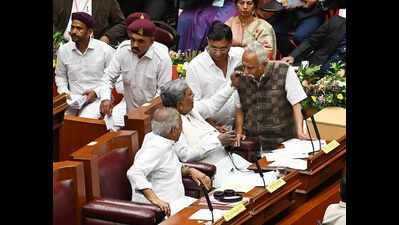
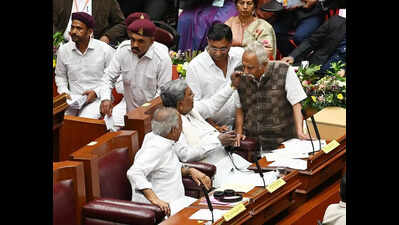
Belagavi: The govt Thursday tabled the Karnataka Social Boycott (Prevention, Prohibition and Redressal) Bill, 2025 in the assembly, proposing a blanket ban on social boycotts enforced by caste panchayats. The new legislation seeks to prohibit and criminalise social boycott of any person or group, including their family, especially when enforced by “caste panchayats”. The bill defines a caste panchayat as any “committee or group formed by members of a community — registered or unregistered, formal or informal — that regulates community practices, controls personal or social behaviour, and settles disputes among members or their families”. This includes bodies that issue oral or written orders, regardless of whether they are called a “panchayat” or go by another name. Tabled by social welfare minister HC Mahadevappa, the bill lists 20 forms of social boycotts. These include refusal to deal with, work for, hire or do business with a person, as well as denying access to services or contractual opportunities. It prohibits refusal to engage in normal professional or business relations and prevent or obstruct a community member from observing social or religious customs. Restrictions on participation in community events — such as functions, congregations, assemblies, meetings or processions — also fall under the definition of social boycott. Acts such as creating cultural obstacles, compelling a community member to wear specific clothing or use a particular language, expelling someone from the community, or preventing children from playing with those of certain families are similarly covered. It specifies that denying a person the right to perform marriage, funeral or other customary religious ceremonies, or committing any form of social ostracism, will be treated as a social boycott. Preventing access to schools, educational or medical institutions, community halls, club halls, cemeteries, burial grounds or other public places will also amount to a social boycott. Refusing entry to places of worship or pilgrimage would also violate the proposed law. The govt has proposed imprisonment of up to three years, a fine of up to Rs 1 lakh, or both, for anyone who aids or abets the commission of a social boycott. A victim or a family member may file a complaint either with the police or directly before a judicial magistrate first class. The bill empowers the district deputy commissioner (DC) to prohibit unlawful assemblies believed to be planning a social boycott and authorises police to take necessary action. It also provides for the appointment of a social boycott prohibition officer of Group A rank to report cases to the magistrate and DC and assist in proceedings. The govt notes that unconstitutional practices such as social boycotts and punishments imposed by extra-judicial bodies like caste or community panchayats persist in parts of the state, causing harassment to individuals. It states that existing laws are inadequate to tackle these practices, making a separate law necessary to prohibit them and punish violators.