







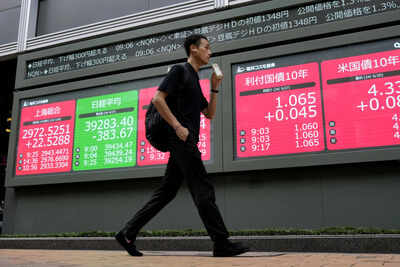
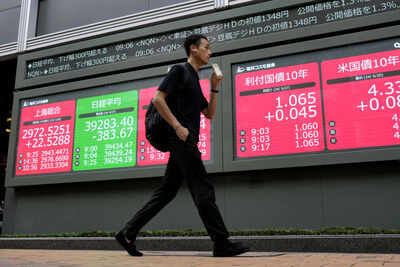
Asian stock markets traded in red on Friday, mirroring Wall Street’s downward momentum as tech stocks continued to weigh down investor sentiments. Traders are struggling with concerns over heavy outlays on the artificial intelligence sector. Focus was also firmly on inflation numbers scheduled for release in the United States later in the session.In Hong Kong, HSI fell 542 points or 2.01% to 26,489. Shanghai and Shenzhen were also trading in red, shedding 0.68% and 0.59% respectively. Japan’s Nikkei was also down, falling 503 points or 0.87% to 57,136 on 11:02 am IST. Meanwhile South Korean Kospi inched higher, adding 43 points to trade at 5,565. The pullback came after several calmer days on trading floors. Sentiment had improved when US employment data came in well above expectations, offering reassurance that the global economic powerhouse remained on solid footing after the turbulence seen across asset classes last week. Still, doubts are mounting about the scale of capital being committed to AI projects. With hundreds of billions already allocated and further spending plans unveiled in recent days, investors are increasingly questioning on how quickly those sums might generate meaningful payback, and whether profits will materialise at all. Adding to the uncertainty has been the emergence of new AI-driven systems able to undertake essential work across areas ranging from legal services to sales and marketing. Their rapid development has intensified concerns among companies that fear being left behind. In commodities, bullion experienced some of the sharpest selling of the week, with gold dipping below $4,900 an ounce and silver sliding to $74. Even so, the moves stopped short of the dramatic swings seen earlier in the month that had unsettled market participants. The next potential catalyst comes from the United States, where inflation data are due later on Friday. Wednesday’s strong jobs report has already led many traders to temper bets on a Federal Reserve rate cut at its upcoming meeting. With the economic outlook appearing somewhat firmer than previously feared, a growing consensus is forming that policymakers may instead wait until July before delivering the next reduction.