




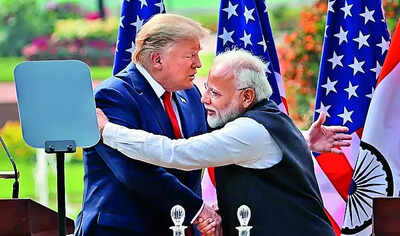
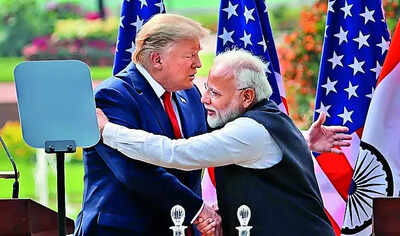
NEW DELHI: The India-US trade deal allows both sides to get the relationship back on to an even keel, but whether it can lead to long-term stability in ties remains open to question.The importance of the agreement, even if conditional, cannot be overstated as it allows India and the US to avert an immediate crisis. India just managed to rid itself of an albatross around its neck that was threatening to smother cooperation with its most important strategic partner even in other areas. However, the estrangement with the US since Donald Trump’s return to the White House has not been about trade alone. There are several other friction points.The first is the India-Pakistan re-hyphenation Trump has brought upon India through his courting of Rawalpindi. It is here US ambassador to India Sergio Gor, who seems to have found a way out of the trade impasse within weeks of arrival, may have an important role to play. Suspense still looms over his dual role as Trump’s special envoy for south Asia and any false move bracketing India with Pakistan, let alone playing sheriff, will be met with resistance.Bilateralism has been the leitmotif of India’s Pakistan policy and, as far as India is concerned, there’s no Nobel Peace Prize for any third party to win.The second concern is related to the US commitment to the Indo-Pacific under Trump, who wants to engage his counterpart Xi Jinping for a “stable peace, fair trade and respectful relations”. Trade differences between India and the US were seen as blocking any forward movement by Quad and a US-India reset must surely clear the ground for a summit meeting. While the US 2026 National Defence Strategy underlines the goal of a balance of power in the Indo-Pacific , it makes no mention of Quad or India.Thirdly, India’s strategic autonomy will likely continue to act as a limiting factor. India will continue to use the same to navigate geopolitical complexities, especially in its relations with the US, Russia and China. India may have, according to Trump, promised to stop buying Russian oil but it will continue to work closely with Moscow in defence and in forums like the SCO and BRICS. India would like Russia to see its energy pivot as a blip caused by market conditions, not as an ebbing of its strategic autonomy.For India, the structural shift in how the US handles the H-1B visa programme remains a major irritant that it hopes Washington will address.Finally, India will also be concerned about the transactional relationship that the US under Trump seeks with India. Many claims made by Trump in his announcement India saying no to Russian oil, agreeing to buy energy and other products worth $500 billion from the US, zero tariff on US products have not yet been confirmed by Indian govt, suggesting there might be a devil in the details. India will hope that some of Trump’s claims are just political signalling, not an ultimatum.