






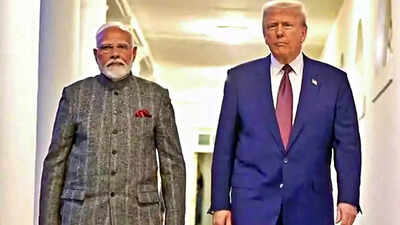
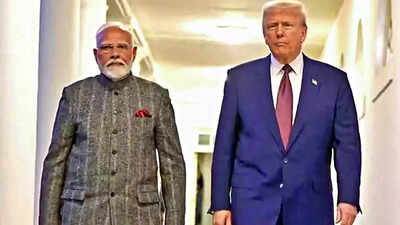
India-US trade deal: Stuck for months since negotiations first began early, the India-US trade deal announcement by US President Donald Trump took everyone by surprise. Despite repeated rounds of talks, even after the US imposed 50% tariffs, the stalemate had continued with the Trump administration insisting that any trade deal with India would be linked to New Delhi stopping crude oil imports from Russia.Incidentally, Trump in his social media post on Truth Social claimed that India has agreed to stop buying crude from Russia. Prime Minister Narendra Modi, while welcoming the announcement of a reduced 18% tariff on Indian goods, did not mention anything related to Russian crude oil imports.
India-US trade deal: What was the trigger?
According to an analysis in the News Week, the recently concluded India-EU Free Trade Agreement (FTA) talks put pressure on the Donald Trump administration. That’s what led to the US blinking first, and agreeing to a trade deal with India, it claimed.Also Read | Lower than Pakistan, China: In trade deal with US, India secures a favourable tariff rate The analysis notes that New Delhi had just wrapped up what Brussels described as a “landmark” free-trade pact. This strengthened India’s negotiating hand while raising concerns in the Trump administration about being sidelined. In fact both India and the EU have termed the FTA a ‘mother of all trade deals’.PM Modi had publicly welcomed the India–EU deal only days earlier, calling it a significant advance that “opens new pathways for growth, investment and strategic cooperation.”The News Week analysis said that the sequencing of events was deliberate. Shortly before the announcement, newly appointed US Ambassador to India Sergio Gor hinted at imminent news with a brief message: “President Trump just spoke with Prime Minister Modi. STAY TUNED…” When the deal followed soon after, diplomats and investors took note. The signal was clear: the recalibration of ties was purposeful and being directed from the highest levels.From the US perspective, the issue is about both energy policy and geopolitics. The White House has made it clear that easing tariffs is linked to the objective of curbing Russia’s oil earnings.Also Read | India-US trade deal: Top 7 points Trump says he agreed on with PM Modi US Treasury Secretary Scott Bessent had recently said that India’s imports of Russian crude had “collapsed” and pointed to “a path” for removing the tariffs. The Associated Press described the approach in clear terms: squeezing Russia’s oil income to increase pressure for an end to the Ukraine conflict, while Trump also spoke of alternative supply routes, such as Venezuela, to prevent a surge in global prices. Incidentally, on Saturday Trump had claimed that India had agreed to buy oil from Venezuela. His Truth Social post announcing the trade deal also said India would increase its purchases of US oil, and in future could also buy Venezuelan oil.This calculation carries added weight as US manages risks tied to Iran, with recent reports indicating Tehran fears a potential US strike could destabilise the regime—underscoring how any shock in the Gulf can quickly send shockwaves in global oil markets, the analysis said.From the US perspective, the issue cuts across both energy policy and geopolitics. The White House has made it clear that easing tariffs is linked to the objective of curbing Moscow’s oil earnings, a view reinforced by Treasury Secretary Scott Bessent, who said India’s imports of Russian crude had “collapsed” and pointed to “a path” for removing the tariffs. The Associated Press described the approach in stark terms: squeezing Russia’s oil income to increase pressure for an end to the Ukraine conflict, while Trump also referenced alternative supply routes, such as Venezuela, to prevent a surge in global prices.Also Read | India-US trade deal: 25% penal tariffs linked to Russian oil gone? White House confirms, but there’s a catch This calculation carries added weight as Washington manages risks tied to Iran, with recent reports indicating Tehran fears a potential US strike could destabilise the regime—underscoring how any shock in the Gulf can quickly reverberate across energy markets.With tensions around Iran adding to the sense of volatility, Reuters reported that Iranian officials are concerned even narrowly targeted US military action could threaten the stability of the regime. At the same time, separate accounts point to a revival of US–Iran nuclear discussions—together underscoring how any flare-up in the Middle East can quickly jolt oil prices and complicate the politics of international alliances.On the political front, the India-US trade deal optics work for both sides. Trump secures a narrative of using leverage to push peace on Russia, while Modi gains tariff concessions and a clearer path for Indian exports, the analysis said. Beneath that surface, however, lies a broader strategic calculation around supply chains: US is keen to lock India in as a manufacturing and defence partner outside China’s orbit, and India wants swift, tangible evidence that closer alignment with the US delivers results, the analysis concludes.