


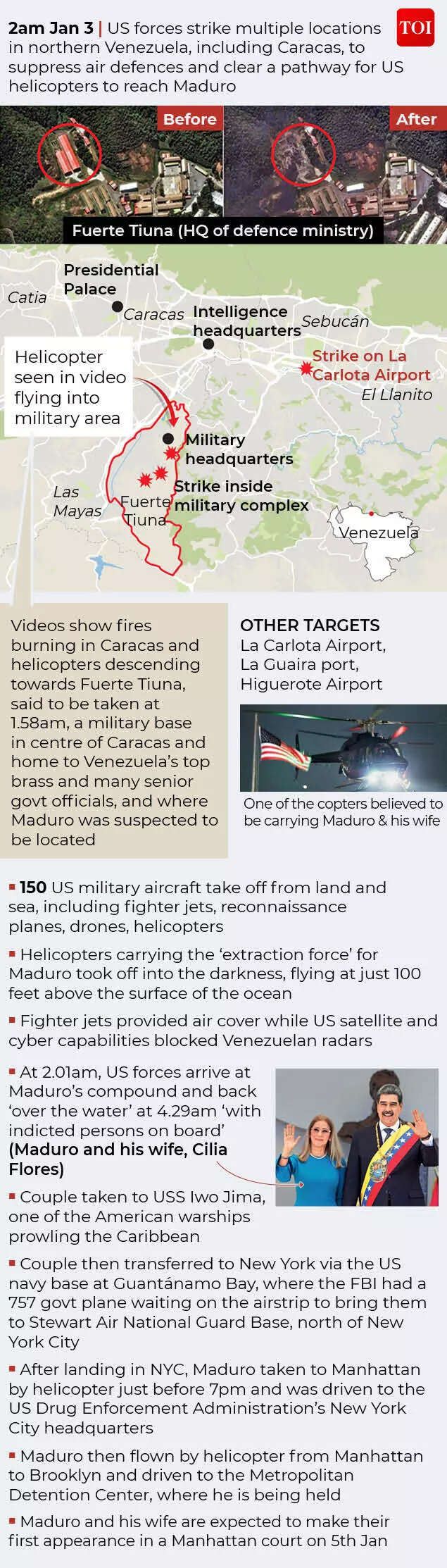
When US special operations forces seized Venezuelan President Nicolas Maduro in a surprise raid and President Donald Trump announced that America would now “run” the country, the move shattered more than a regime. It fractured a basic assumption of the post–Cold War order: that even superpowers must pretend to follow rules.Driving the newsPresident Donald Trump’s audacious seizure of Venezuelan leader Nicolas Maduro – followed by his declaration that the United States will “run” the country – is sending shockwaves far beyond Latin America. The move is now fueling a sharper and more unsettling question in Asia: Would China’s leader Xi Jinping attempt a similar play against Taiwan?
What once sounded like an abstract legal debate has turned into a live geopolitical concern. From Washington to Beijing to Taipei, officials and analysts are reassessing how much international law still constrains great powers – and who benefits if it doesn’t.
Why it matters
- Trump made little effort to cloak the Venezuela operation in the language of restraint. He framed it as law enforcement, counter-narcotics, regime change, and economic recovery in one breath.
- “We’re going to run the country until such time as we can do a safe, proper, and judicious transition,” he said. Asked how the occupation would be paid for, he turned to geology. “Money coming out of the ground,” he said, referring to Venezuelan oil. “We’re going to be taking a tremendous amount of wealth out of the ground.”
- The US has long positioned itself as the chief defender of a rules-based international order, especially when it comes to sovereignty and the use of force. Trump’s Venezuela operation – launched without congressional approval or UN authorization – directly challenges that posture.
- Critics argue the damage isn’t confined to the Western Hemisphere. If Washington asserts the right to invade a foreign country, seize its president and oversee its transition indefinitely, rivals could claim the same latitude in their own neighborhoods.
- Democratic Senator Mark Warner captured that fear bluntly, warning that “if the United States asserts the right to use military force to invade and capture foreign leaders it accuses of criminal conduct, what prevents China from claiming the same authority over Taiwan’s leadership?” He added that once this threshold is crossed, “the rules that restrain global chaos begin to collapse, and authoritarian regimes will be the first to exploit it.”
The big pictureTrump has framed the Maduro operation as part of a broader effort to restore US dominance in the Western Hemisphere, invoking what his administration calls a “Trump Corollary” to the Monroe Doctrine. In that worldview, Washington claims wide discretion to intervene against leaders it deems illegitimate, criminal or aligned with rival powers.
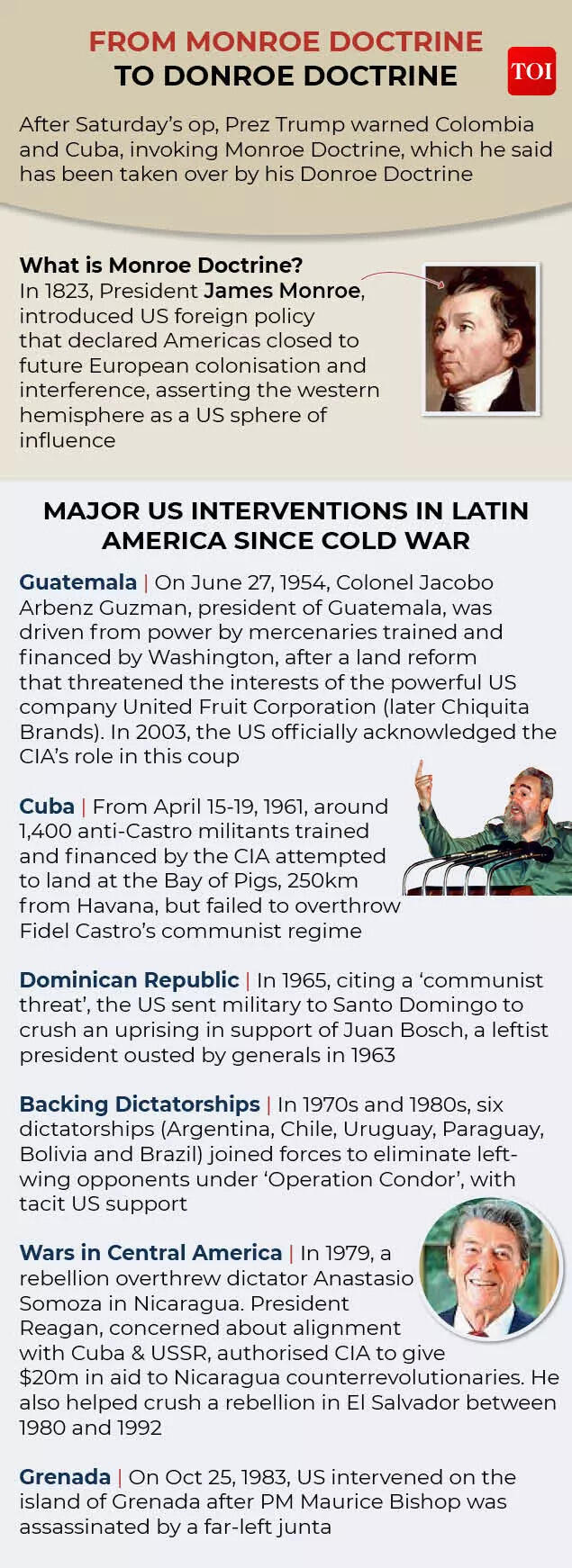
But history suggests such precedents rarely remain geographically contained. Russia has repeatedly cited the US-led invasion of Iraq to justify its own actions in Ukraine. Analysts now say China could similarly point to Venezuela as evidence that international norms are optional when great powers invoke national security.Beijing has long declared Taiwan’s return to Chinese control a core national objective. While China has so far relied on military pressure, coercion and diplomatic isolation rather than open conflict, Trump’s actions risk altering the strategic calculus Xi operates within.
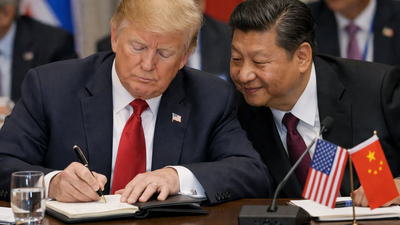
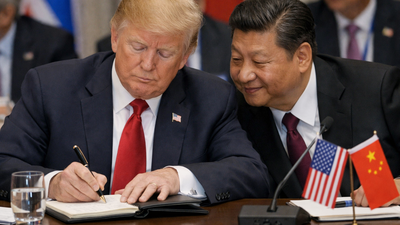
The world today is undergoing changes and turbulence not seen in a century, with unilateral acts of hegemony severely undermining the international order. All countries should respect the development paths independently chosen by the peoples of other nations, abide by international law and the purposes and principles of the United Nations Charter, and major powers, in particular, should take the lead in doing so.
Chinese President Xi Jinping
What they are sayingPublicly, Beijing has condemned the US operation in harsh terms. China’s foreign ministry said the raid “seriously violates international law,” calling it “hegemonic behavior” and demanding Maduro’s immediate release.Yet that official outrage is only part of the story. Bloomberg reported that Trump’s raid exploded across Chinese social media, racking up hundreds of millions of views on Weibo. Some users openly praised the operation as a blueprint for how China could handle Taiwan.“I suggest using the same method to reclaim Taiwan in the future,” one user wrote. Another asked: “Since the US doesn’t take international law seriously, why should we care about it?” A third referred to the operation as “a perfect blueprint” for a surprise strike.Ryan Hass, a former US diplomat now at the Brookings Institution, cautioned on X that Venezuela alone is unlikely to transform Beijing’s strategy overnight. But he added that China may privately emphasize that it expects “the same latitude for great power exemptions to international law that the US takes for itself.”Between the linesTrump’s team insists the Venezuela raid was lawful because Maduro had been indicted in a US court – a justification many international law experts flatly reject. Critics argue that rationale effectively creates a doctrine under which any powerful state can criminalize a foreign leader and then claim legal cover for military action.
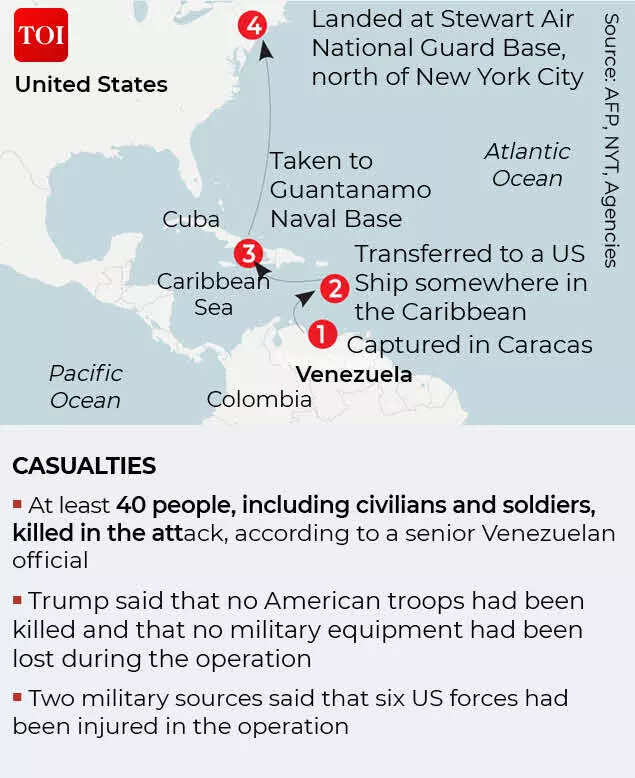
William Wohlforth of Dartmouth told FP that the operation “weakens the already compromised US ability to credibly make arguments about rules concerning use of force in international politics,” adding that the cost of doing so is “zero” for an administration that doesn’t prioritize those norms.Harold Koh, a former State Department legal adviser, was even harsher, saying Trump had “baldly violated the UN Charter” and engaged in an illegal extraterritorial arrest that would be fiercely contested in US courts.Those critiques resonate deeply in Asia, where US credibility is central to deterring Chinese aggression. Taiwan’s security rests not just on American weapons, but on the assumption that Washington will treat sovereignty violations as unacceptable – even when committed by itself.Zoom in: Why Taiwan is differentChina has long insisted that Taiwan is a domestic issue, not a foreign country. Under President Xi Jinping, that position has hardened into doctrine. Military pressure has intensified, from live-fire drills to near-daily incursions around the island. But Beijing has so far stopped short of a direct strike.The restraint has never been about respect for international law alone. It has been about risk: US intervention, sanctions, economic fallout, and the possibility of a disastrous war.Moreover, a Venezuela-style lightning raid on Taiwan would be vastly more complex. Taiwan is a heavily defended island with a modern military, deep intelligence ties to the US, and immense global economic significance due to its role in semiconductor manufacturing.
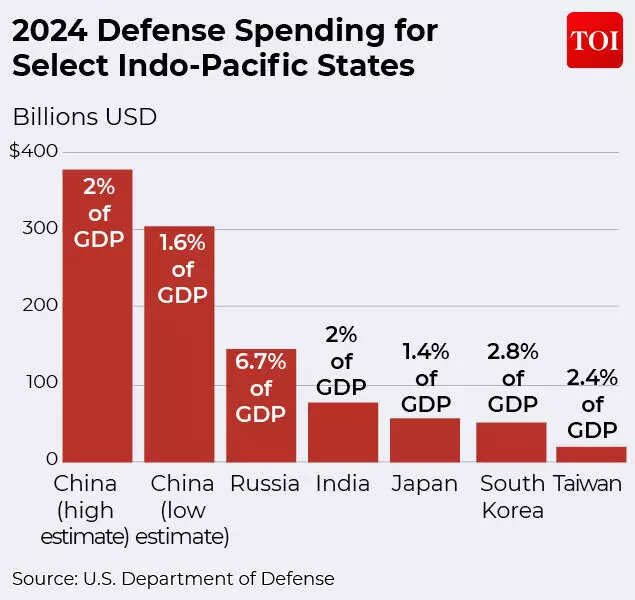
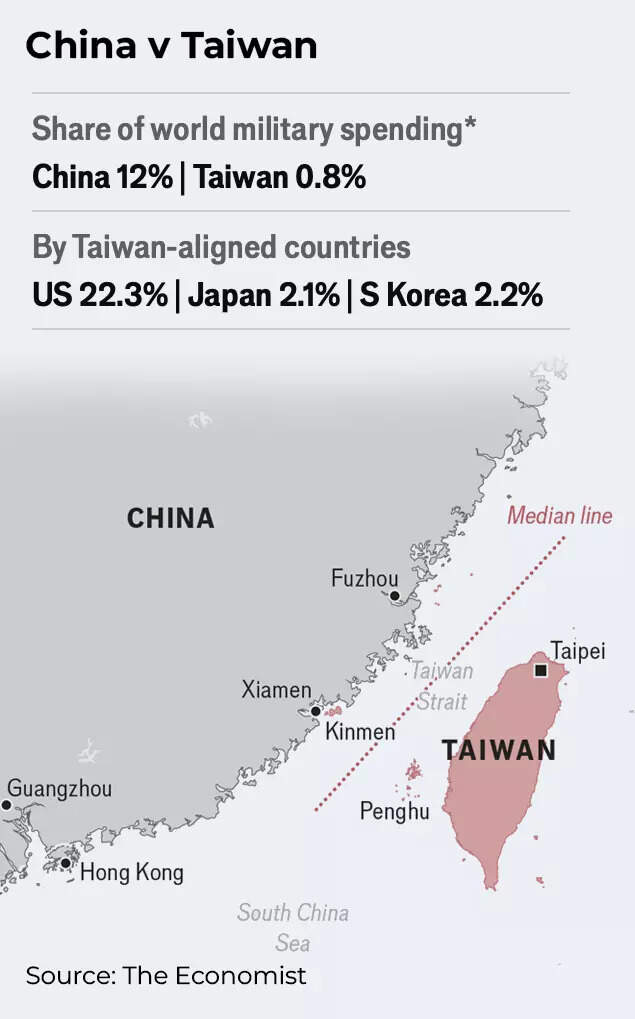
Even so, analysts caution that precedents matter most when rivals are probing for justification rather than feasibility. Lyle Morris of the Asia Society Policy Institute said Trump’s actions could fit neatly into how Beijing already views great-power behavior.“To Xi, Trump’s actions could be viewed as consistent with great powers intervening in neighboring countries in the name of national security,” Morris said, noting that this is also how Beijing interprets Russia’s invasion of Ukraine. “A potential Chinese invasion of Taiwan could fall into the same bucket.”Others note that China doesn’t need to copy the tactic exactly. Drew Thompson of the S Rajaratnam School of International Studies told Bloomberg that while the People’s Liberation Army lacks experience with complex overseas raids, Beijing has “other options for neutralizing Taiwan’s leader,” including non-traditional or covert means.A dangerous feedback loopTrump’s Venezuela move also feeds a broader narrative Beijing is eager to promote: that the US is abandoning the international order it once built. Chinese state media seized on Trump’s comments about extracting Venezuelan oil to pay US costs as proof of what Xinhua called “the colonial era of barbaric plunder.”That messaging plays well domestically and abroad, particularly in the Global South. It allows China to posture as a defender of sovereignty – even as it expands coercion in the South China Sea and ramps up military pressure on Taiwan.At the same time, the operation exposes limits to authoritarian solidarity. Russia and China both condemned the raid, but neither lifted a finger to stop it. As Hal Brands wrote in Bloomberg Opinion, they could offer “thoughts and prayers” but little else in the face of a determined US force.That lesson cuts two ways: it may deter some challengers, but it also underscores that norms, not alliances, are often what restrain unilateral action.What next for Xi – and WashingtonMost experts agree Xi is unlikely to immediately attempt a Venezuela-style strike on Taiwan. The risks – militarily, economically and politically – remain enormous. Taiwan would not be an isolated target, and the chance of direct conflict with the US is far higher.But Trump’s actions have already shifted the debate. They lower the rhetorical and legal barriers that Washington once used to argue that sovereignty violations are unacceptable under any circumstances.They also complicate US messaging. Trump has previously downplayed the risks of a Taiwan invasion and suggested Taipei should pay more for American protection. His national security strategy focuses far more on asserting dominance in the Americas than on deterring China in Asia, reinforcing doubts about long-term US priorities.As Jennifer Kavanagh of Defense Priorities told AFP, Venezuela raises the question of “if the US can declare a leader illegitimate, go and remove him and then run the country, why can’t other countries?”The bottom line
- Trump’s Venezuela operation may prove tactically successful. Strategically, it has already changed the conversation in Beijing, Washington and Taipei.
- Xi doesn’t need to copy Trump’s playbook step-by-step for the precedent to matter. The signal – that power can override rules if the justification is framed broadly enough – is already out there.
- The world is now left with a question that did not exist before last weekend: If Trump can do a Venezuela, why can’t Xi Jinping do a Taiwan?
(With inputs from agencies)