







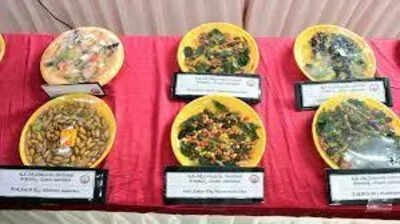
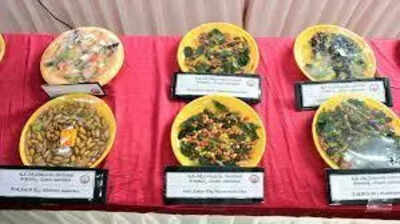
Dharwad: The four-day Krishi Mela-2025, organised by the University of Agricultural Sciences, Dharwad, has attracted thousands of farmers, agri-enthusiasts and visitors to its sprawling campus with a rich showcase of crops, seeds, chemical fertilisers, pesticides, organic farming techniques, modern machineries and latest research in farming practices.While the mela offered valuable insights and expert guidance to farmers on a range of agricultural issues, it was the unusual culinary display of insect-based foods by the department of entomology that stole the spotlight.The unique showcase — featuring dishes such as silkworm dry chili, silkworm soup, cricket fry, praying mantis tandoori, black soldier fly masala, grasshopper 65, and even an insect-mix pizza — was aimed at educating visitors about the nutritional benefits and ecological value of edible insects. The team demonstrated the life cycles, classifications, and food value of various insects, while also drawing attention to the difference between disease-carrying and non-harmful insect species.The entomologists explained that insects like crickets, mealworms, and grasshoppers are being incorporated into a variety of products, including flour, protein bars, pasta and even burgers. They explained that these foods are highly nutritious, offering rich sources of protein, vitamins, minerals, and beneficial fats, while also having a lower environmental impact over traditional livestock farming.Dishes made from as many as 13 insects, including house cricket, field cricket, African migratory locust, giant mealworm beetle, silkworm pupae, European honeybee, white grub, greater wax moth and lesser wax moth, were on display. Ganapati Hegde, head of the department of entomology, said, “Compared to conventional foods, insect-based foods are easier to prepare and provide a very high amount of protein, making them excellent food sources.”“Indians have started showing interest in insect-based foods in recent years. The department has been creating awareness through the ‘Fascinating World of Insects’ exhibition by showcasing dishes made from insects,” said research scholar Shivakumar. “Vegetarian and non-vegetarian foods contain 6% to 30% protein whereas insects contain 50% to 60% protein. Insects are consumed as food in many countries. Some tribal communities in India already consume insect-based dishes like red ant chutney,” he added.The expo also featured rare and fascinating displays on insect biology, reproduction, and their interaction with human environments. Visitors also explored exhibits on carnivorous plants, insect anatomy and even artwork crafted using insects.